
Leveraging Diamond Tools for Optimal Plateau Finishing
May 18th 2026
When blueprinting a high-performance engine, achieving the correct cylinder wall crosshatch angle and micro-texture is paramount for ring seat and oil retention. Conventional vitrified abrasives often suffer from rapid wear and geometric deflection during execution. Transitioning to advanced diamond tools from Regis Manufacturing provides the structural rigidity and cutting consistency necessary to achieve exact, repeatable surface finishes on modern, hardened cylinder liners.
Maintaining Geometric Truth & Bore Roundness
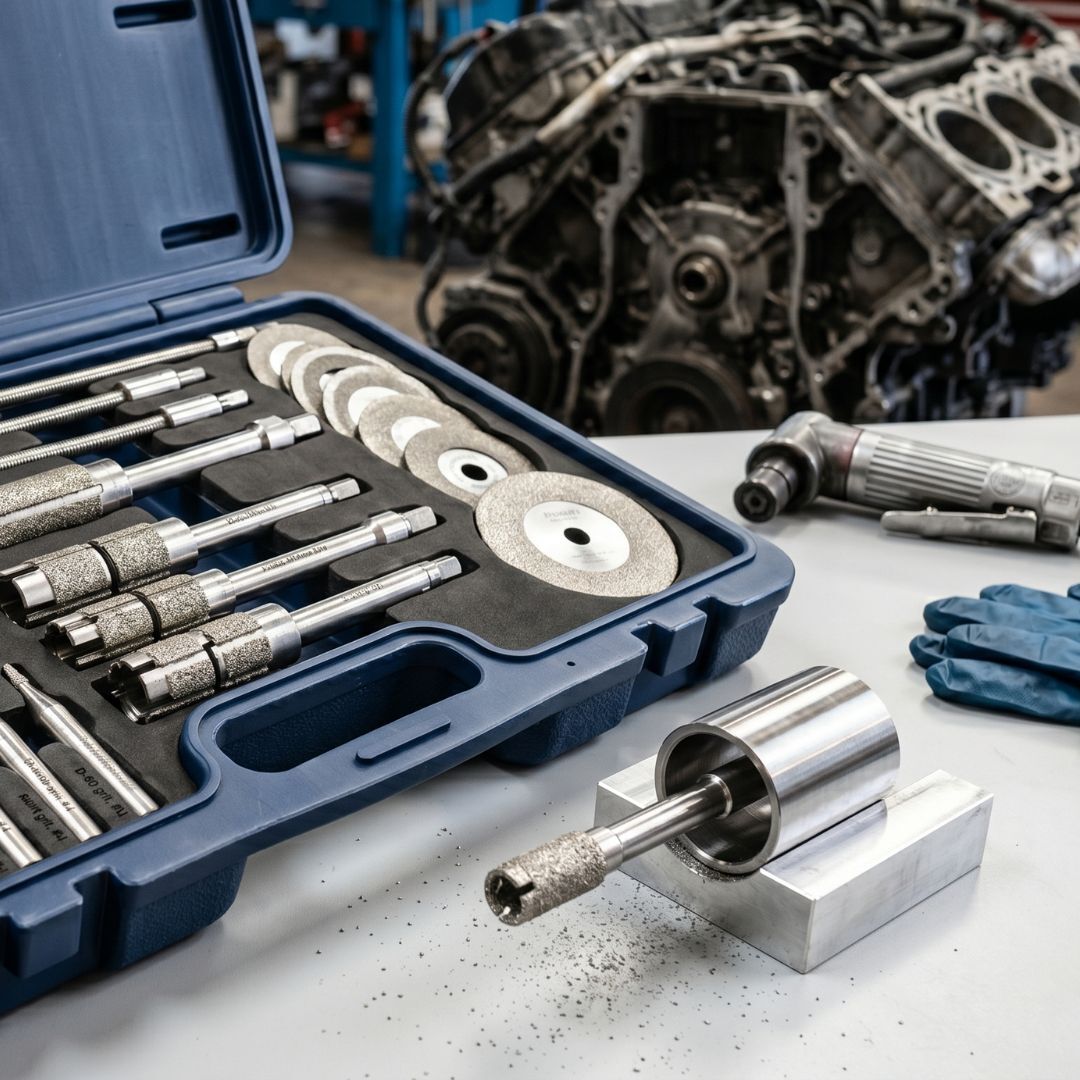
Vitrified honing stones break down continuously, changing shape and requiring constant adjustment to prevent taper and out-of-roundness. Conversely, metal-bonded diamond tools maintain their precise profile throughout the entire honing cycle, ensuring absolute bore straightness. This structural integrity eliminates the risk of introducing hour-glassing or bell-mouth geometries into the cylinder, keeping tolerances within ten-thousandths of an inch.
Optimizing Crosshatch Consistency & Depth
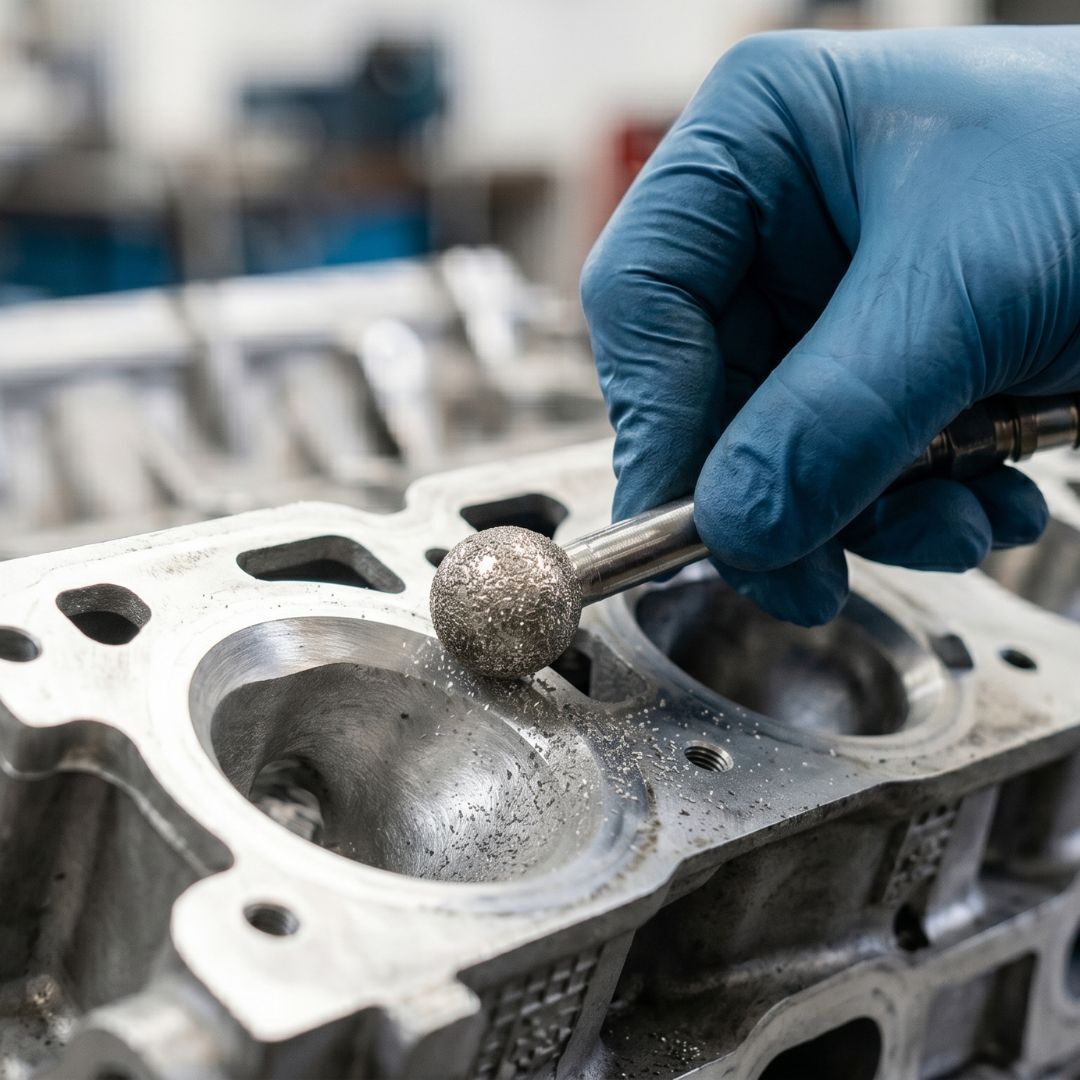
Achieving a precise crosshatch angle requires a synchronized balance between spindle RPM and linear stroke speed. Because diamond tools cut with exceptional efficiency under constant load, they produce highly uniform, clean-cut micro-grooves without tearing the metal matrix. This consistent cutting action allows you to establish the exact valley depth needed to harbor vital lubrication without inducing premature ring wear.
The Critical Role of the Plateau Finish
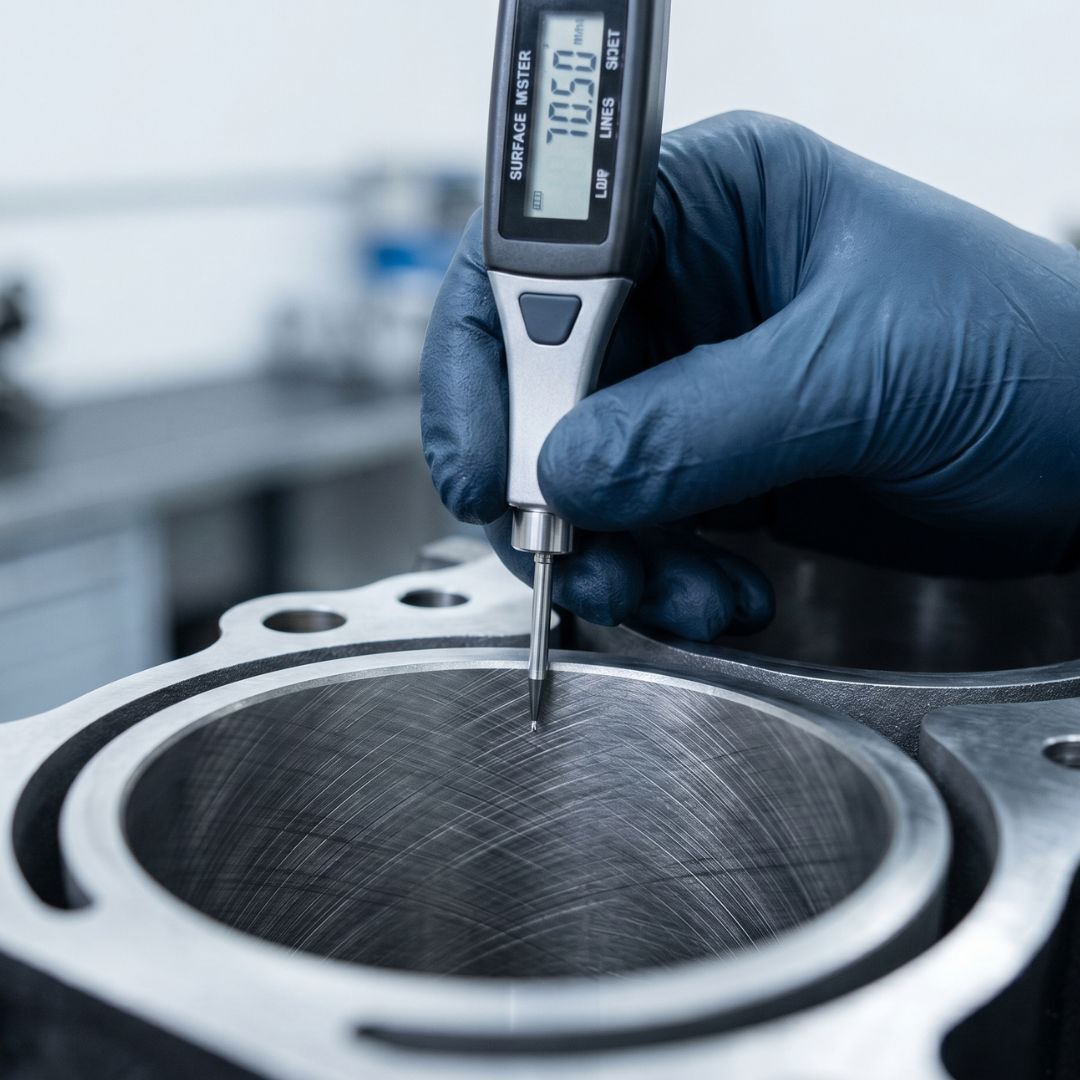
Superficial peak removal is the final step in creating a race-ready cylinder wall surface. After establishing the initial depth with coarser diamond profiles, you can utilize ultra-fine diamond tools or specialized plateau brushes to shear away fractured peaks. This creates a smooth, flat bearing surface that minimizes friction during initial startup while retaining deep valleys to preserve the hydrodynamic oil film.
Managing Coolant Strategy for Diamond Abrasives
Operating super-abrasive tooling requires strict adherence to proper lubrication and filtration protocols to prevent stone loading and surface gauling. Unlike vitrified stones that rely on sulfur-based oils, metal-bonded diamond clusters perform optimally with specialized water-soluble synthetics or high-flow, light-viscosity honing fluids. Continuous micro-filtration is mandatory to ensure dislodged cast-iron particulates do not scratch the precisely honed surface finish.
Achieving a flawless cylinder finish demands an uncompromising understanding of surface metrology and modern abrasive technology. At Regis Manufacturing, we supply the premium engine building components, precision valvetrain parts, and specialized technical tools needed to execute elite-level machine work.


