
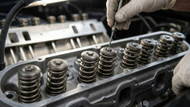
Common Valve Spring Issues and How to Spot Them During a Rebuild
Mar 9th 2026
At Regis Manufacturing, we know that when you're in the middle of an engine assembly, it’s the small details that save you from a major headache later. Valve springs might look simple, but they handle a lot of stress every time the engine runs. Taking a few extra minutes to inspect them properly during your valve spring work can be the difference between a smooth first start and a broken part. Here’s a look at what to keep an eye out for.
Identifying Fatigue and Loss of Tension
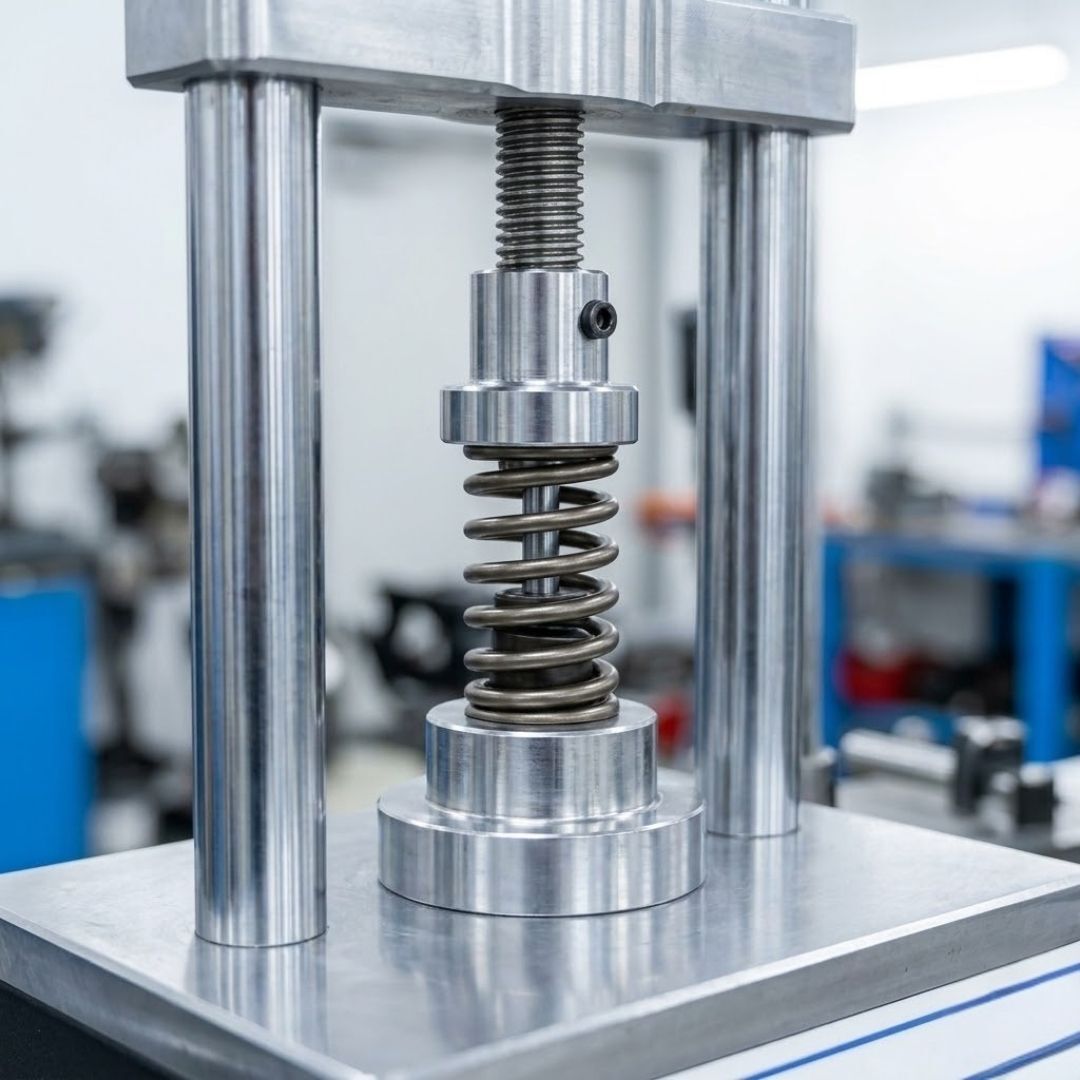
Over time, the repeated heating and cooling cycles, combined with millions of compressions, cause valve springs to fatigue, resulting in a loss of tension. A fatigued spring cannot effectively control the valve, leading to valve float at high engine speeds. During your valve spring work, always measure the spring’s free height and test its pressure at both the installed and open heights using a dedicated tester.
Checking for Coil Bind and Improperly Installed Height
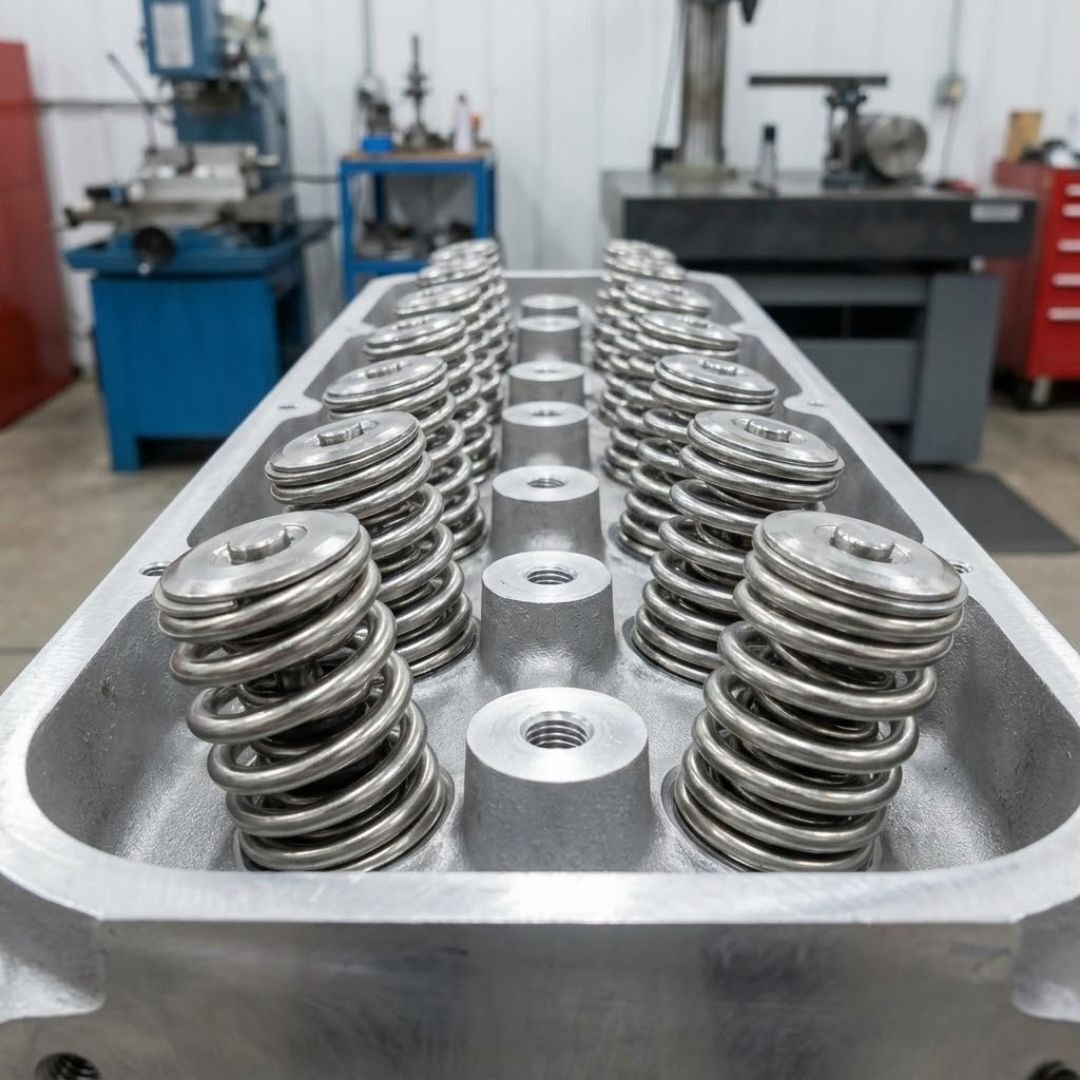
Coil bind occurs when the valve spring is compressed to the point where the individual coils touch, solidifying the spring. This catastrophic scenario often results from installing a high-lift camshaft without verifying the spring’s capability. Make sure you take the time to calculate the coil bind clearance (the distance between open height and coil bind) and ensure the installed height is set correctly.
Inspecting for Pitting, Scoring, and Damage
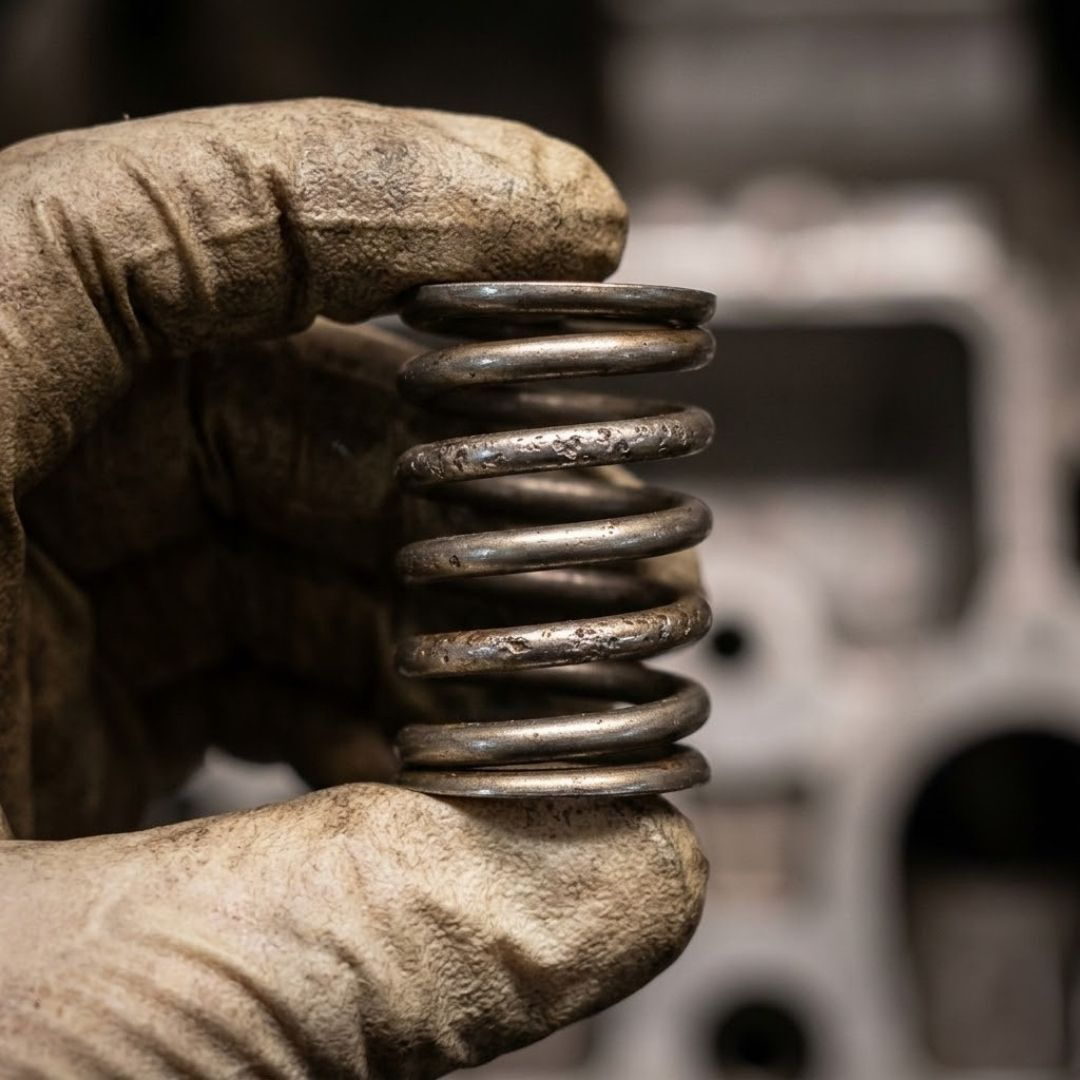
Examine each valve spring closely for any surface imperfections. Pitting (often caused by corrosion during storage), scoring from improper installation tools, or tool marks can act as stress risers. Under the intense loads of operation, these minor flaws can quickly develop into fractures, leading to complete spring failure.
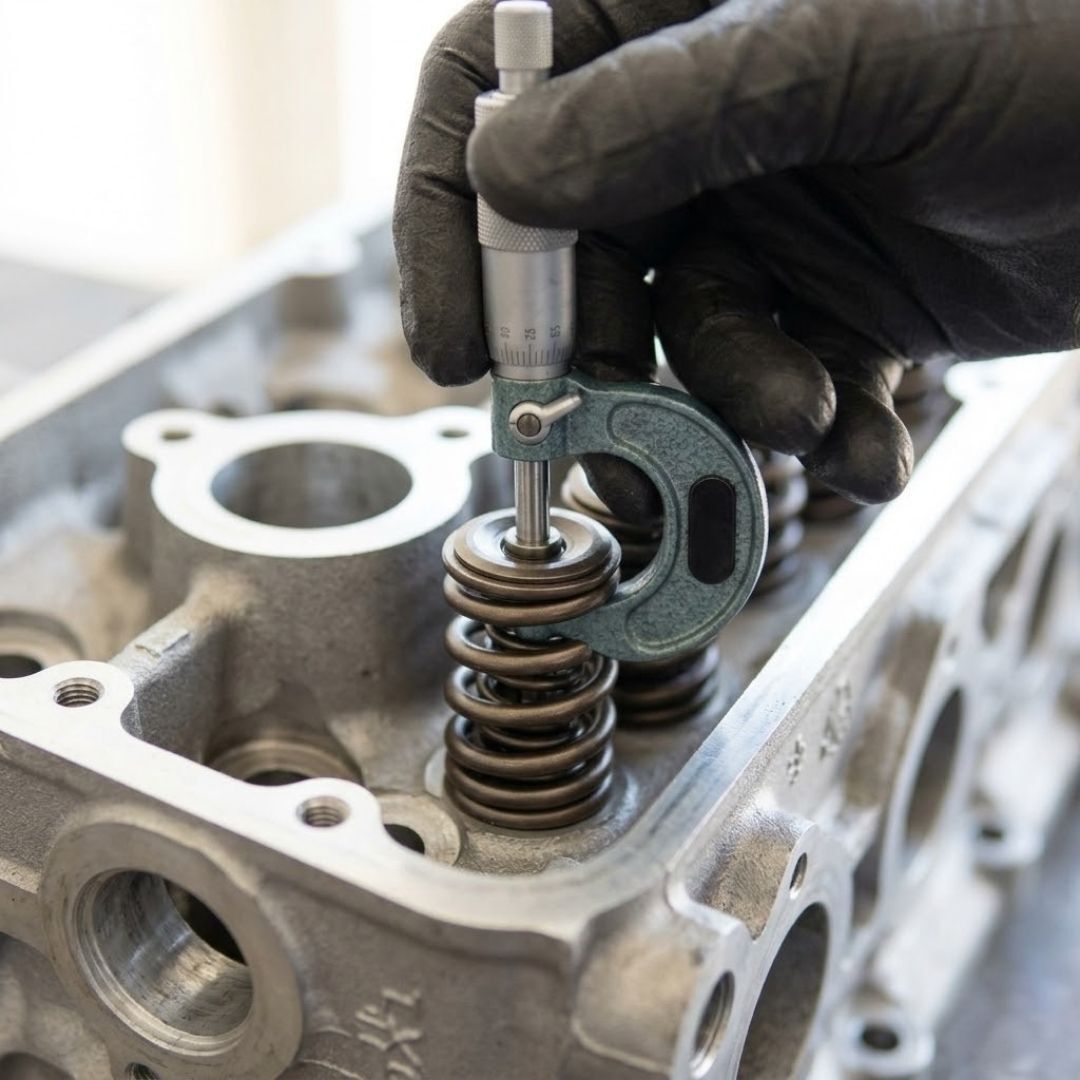
Spotting Valvetrain Harmonic Issues
Harmonic vibration, or "spring surge," occurs when the spring’s natural frequency matches the engine’s RPM. While harder to spot visibly, you can look for evidence of a surge. Inspect the valve spring retainers and locks for signs of unusual wear or fretting. Severe harmonics can loosen the retainer locks, causing the valve to drop.
Proactively identifying these common valve spring issues is an essential part of a successful engine assembly. By meticulously testing pressure, calculating clearances, and visually inspecting every spring, you prevent costly failures and ensure your engine performs exactly as intended. At Regis Manufacturing, we are here to support your engine build process with professional-grade tools and high-quality valve spring components. Shop with us today!


